Auto Ranging Multimeter Explained: A UK Buyer's Guide
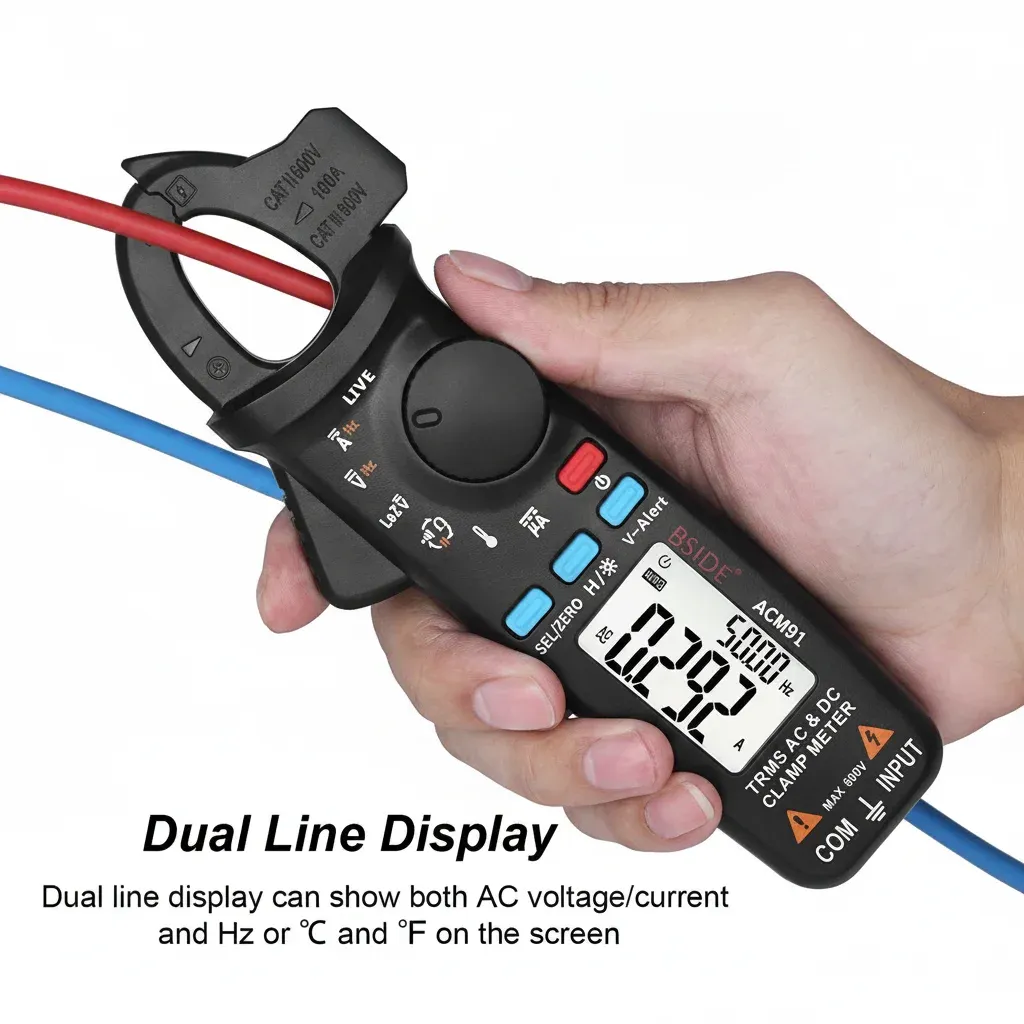
An auto ranging multimeter chooses the measurement range for you: pick the function — volts, resistance, continuity — and the meter scales the display automatically, instead of asking you to guess between 2V, 20V, 200V and 600V before every reading. If you are an apprentice putting together your first kit, that removes the most common beginner error in electrical testing before it happens. This guide explains how auto ranging actually works, which specifications matter on a first meter, and how to buy once instead of twice.
At ClampMeter UK, the focus is practical testing for real faults, not feature lists for their own sake. Spec sheets stack True RMS, counts, LoZ and NCV into one intimidating wall of jargon; a tool list from a college or a first employer rarely explains any of it. Each of those terms is unpacked below in plain terms, so you can judge what your own work actually needs.
Key Takeaways
- An auto ranging multimeter selects the correct measurement range automatically, which reduces setup mistakes and saves time.
- For a first working meter, the sensible baseline is a True RMS model with a clear CAT rating, fast continuity, resistance and dependable voltage measurement.
- If you diagnose low current faults such as parasitic drain, an ordinary multimeter may not be enough on its own; a low current clamp meter can be far safer and more convenient.
- Check for UK-relevant safety details such as fused current ranges, proper test leads, sensible CAT III/CAT IV suitability and clear operating instructions.
- Auto ranging is useful, but accuracy, input protection and real-world usability matter more than long feature lists.
What is an auto ranging multimeter?
An auto ranging multimeter is a digital meter that automatically chooses the most suitable measurement range for the value being tested. On a manual ranging meter, you would need to select, for example, 2V, 20V, 200V or 600V before taking a voltage reading. With auto ranging, you select the function, such as volts AC, volts DC or resistance, and the meter handles the range selection for you.
In practice, that means less time turning the dial and less risk of an over-range or unreadable display. If you are checking an unknown voltage on a circuit, especially during fault finding, that convenience is more than a luxury. It can make testing more efficient and reduce avoidable user error.
Because the meter handles range selection, auto-ranging models are generally quicker to use and easier to learn than manual-ranging meters — which is why they dominate the first-meter market. The trade-off is a brief settling pause while the meter finds the right scale, which matters far less than reading a display correctly on your first attempt.
How auto ranging works in real use
Inside the meter, the electronics sample the input and switch to the most appropriate scale. If you measure a small battery voltage, the display settles on a suitable decimal resolution. If you then move to a higher voltage circuit, the meter adjusts again. The same principle applies to resistance and, on some models, frequency or capacitance.
The main benefit is speed. The second benefit is readability. Instead of seeing a reading that is too compressed or over-ranged, you get a display that makes sense with minimal intervention.
Example: checking voltage in a UK property
A competent person investigating a lighting fault may test a switched live, a permanent live and a neutral reference point. With auto ranging enabled, the meter can move between low control voltages and nominal 230V mains without repeated range changes. The UK nominal low-voltage public supply is 230V, with a permitted tolerance under ESQCR arrangements used in practice across the network.
Example: tracing a vehicle or leisure battery issue
On a van conversion or 12V system, battery condition, charging behaviour and parasitic drain often need to be checked in sequence. An auto ranging meter helps with battery voltage, fuse checks, continuity and resistance tests. If current draw is the real problem, pairing the multimeter with a low current clamp meter is often the safer and more efficient route.
Why UK buyers choose auto ranging models
For many UK buyers, the appeal is straightforward: fewer wrong settings, faster fault finding and less hassle when moving across different systems. That is particularly useful where one tool needs to cover domestic electrical checks, automotive diagnostics, HVAC controls and off-grid or solar work.
Auto ranging is also friendly to users who are experienced in their trade but do not spend every day on meter-heavy diagnostic work. A heating engineer checking boiler controls and pumps, for example, may prefer a meter that is quick to set and easy to read under time pressure.
There is also a training angle. If you are on a college course or starting on site, the meter you buy now is the one you will learn correct habits on. An auto ranging model lets you concentrate on where to put the probes and what the number means, rather than on whether the dial is set to the right decade — and those are the habits an assessor actually checks.
Auto ranging multimeter vs manual ranging
Where auto ranging wins
- Speed: useful when moving between different tests in one job.
- Convenience: less need to think about scale selection.
- Reduced setup errors: helpful for unknown values and intermittent faults.
- Better for mixed-use work: ideal if you switch between domestic, automotive and low-voltage systems.
Where manual ranging still has a place
- Stable repeat testing: some users prefer fixing a range for consistency.
- Speed of response in niche tasks: experienced technicians may want direct control.
- Budget models: simple manual ranging meters can be cheaper.
For most buyers in 2026, auto ranging is the more practical option unless there is a specific reason to prefer manual control. On a tight first-kit budget, resist the temptation to save a few pounds with a manual-ranging model: the money saved comes straight back out in misread ranges and slower work.
What features matter most in an auto ranging multimeter
Not every auto ranging multimeter is suitable for serious work. The function sounds impressive, but range selection alone does not guarantee a dependable instrument. These are the features worth prioritising.
True RMS measurement
If you test modern electrical systems, True RMS is highly desirable. Many loads now involve non-linear waveforms, including variable-speed drives, switched-mode power supplies, chargers, HVAC electronics and some solar or inverter equipment. A non-True RMS meter can misread these conditions. True RMS gives a more accurate reading where the waveform is not a clean sine wave.
Low current capability
This is often overlooked. Standard multimeters measure current by breaking the circuit and sitting in series, which is inconvenient and adds risk if done poorly. A clamp jaw reads current without opening anything; our AC/DC current clamp meter guide covers when that capability is worth having from day one.
CAT rating and input protection
For UK mains work, check the meter’s measurement category carefully. A meter used around fixed installation circuits will commonly need CAT III suitability, and some applications near service entrances call for CAT IV equipment. The printed rating must be matched with the actual job, not treated as a badge. Robust internal protection, quality leads and correct fusing matter just as much.
Clear display and backlight
Work does not always happen at a bench under bright lighting. A backlit screen, strong contrast and sensible digit size help when testing in lofts, plant rooms, meter cupboards and vehicle cabins.
Non-contact voltage and ghost voltage awareness
Some modern meters include non-contact voltage detection and low impedance voltage functions or related features that help distinguish induced voltage from a usable live source. Ghost voltages can waste time and cause confusion in long cable runs or electronic control circuits. The right meter features can help, though they never replace safe isolation procedures.
Continuity response and resistance range
A sluggish continuity buzzer is frustrating in real fault finding. Fast continuity indication is valuable when checking fuses, conductors, bonding continuity and switch operation. Resistance range quality also matters when diagnosing sensors, heating elements and connections.
Who should buy an auto ranging multimeter?
This guide is written for the buyer with the least room for error: the apprentice or career-changer assembling a first kit on a first wage. The maths is unforgiving — probes, a voltage tester and boots all come out of the same budget, so a meter that needs replacing within a year is the most expensive kind of cheap.
The good news is that one well-chosen auto ranging meter covers almost everything early training throws at you: continuity on dead circuits, voltage checks, resistance on sensors and elements, and fuse testing. If your placement leans automotive or building services, the same instrument still applies — the functions stay identical, only the circuits change.
Two checks before you spend anything. First, ask your college or employer whether they specify a minimum CAT rating or a particular tester for coursework; a £40 mistake hurts more than a £70 right answer. Second, be honest about current measurement: if tracing live current draw is going to be part of your work, read our AC/DC current clamp meter guide before buying a probe-only meter, because that is the one capability you cannot bolt on later.
An auto ranging multimeter is a diagnostic tool, not a substitute for competence or for dedicated installation testers where BS 7671 verification is required — your training covers when each applies.
UK buying checks before you order
1. Match the meter to the job
Start with the actual tasks you do most often. If your work is mainly automotive, low-current DC capability matters more than very high CAT ratings. If you work on building services, mains safety and True RMS performance should move higher up the list.
2. Look beyond the word “auto ranging”
Some low-cost meters advertise auto ranging but offer poor lead quality, weak protection or slow response. Read the specification sheet closely. Check voltage limits, resistance range, continuity function, frequency range, capacitance support and current measurement method.
3. Check compliance markings and documentation
Look for clear UKCA or CE marking as applicable, a printed CAT rating you can match to your work, and test leads with shrouded connectors and finger guards in line with GS38 good practice. Trustworthy sellers publish specifications, manuals and warranty terms where you can read them before paying.
4. Consider bundled usability
A useful kit may include quality probes, crocodile clips, a temperature probe if relevant, and a durable carry case. These details affect daily use more than many buyers expect.
5. Buy from a specialist, not just the cheapest listing
Electrical testing equipment is one category where specialist support has real value. The right seller can help you understand whether you need a standard multimeter, an auto ranging model, or a clamp meter that can handle low current safely and accurately.
Safety points UK users should not ignore
Any discussion of meters should be grounded in safe practice. An auto ranging multimeter can reduce range-selection mistakes, but it does not make unsafe work safe.
- Prove your tester on a known source before and after checking for dead where safe isolation is required.
- Inspect leads, shrouds and probe tips before use.
- Use the correct input terminals for the function selected.
- Never assume current measurement is harmless; in-line current testing can expose the meter and user to serious risk if set up incorrectly.
- Do not remove covers or work live unless the task is justified, controlled and carried out by a competent person.
- For formal inspection and testing of fixed wiring, use the correct instruments and follow BS 7671 procedures rather than relying on a general-purpose multimeter alone.
These points matter in every setting, from domestic jobs to NHS estates, schools, retail premises and light industrial units. The environment may differ, but the discipline around safe testing should not.
When an auto ranging multimeter is not enough on its own
There are jobs where a standard multimeter, even a very good one, is only part of the answer. Parasitic draw diagnosis is a good example. Measuring tiny current draw by breaking into the circuit can be awkward and can reset modules or disturb the very fault you are trying to catch.
That is where a low current clamp meter earns its place: it reads down to 1mA without opening the circuit. The full case — sensing, zeroing and where it beats a series connection — is in our AC/DC current clamp meter guide.
Still weighing a probe meter against a clamp-jaw combination as your first purchase? Our clamp meter vs multimeter comparison settles that decision properly.
Common buying mistakes
- Buying on price alone: a very cheap meter may be fine for basic low-voltage bench work, but not for serious field use.
- Ignoring True RMS: this can lead to misleading readings on modern electronic loads.
- Confusing convenience with capability: auto ranging is useful, but it does not replace accuracy, safety rating or current measurement suitability.
- Overlooking low current needs: if parasitic drain is on your job list, make sure your chosen tool can handle it properly.
- Using the wrong tool for installation testing: a multimeter is not a substitute for dedicated verification instruments required for certain formal tests.
Call to action: choose a meter built for real diagnostics
If you are buying an auto ranging multimeter because you need more than basic readings, it makes sense to choose a tool designed around the faults people actually face: parasitic draw, ghost voltages, mixed AC/DC systems and modern electronic loads.
Our True RMS AC/DC clamp multimeter is built for exactly this brief: 6000-count auto-ranging, True RMS, LoZ, NCV, capacitance and temperature in one CAT III 600V instrument at £70.96 — inside a first-kit budget without a second purchase looming. A 12-month UK warranty and 30-day returns mean a mistake costs you postage, not a month's tool money.
Frequently Asked Questions
Is an auto ranging multimeter better than a manual ranging one?
For most UK buyers, yes. It is quicker to use and reduces the chance of selecting the wrong range. Manual ranging still suits some experienced users who want direct control for repeat testing, but auto ranging is usually the more convenient everyday choice.
Do I need True RMS on an auto ranging multimeter?
If you work on modern electrical or electronic systems, True RMS is strongly recommended. It gives more reliable readings where waveforms are distorted by drives, inverters, chargers or switched-mode electronics.
Can an auto ranging multimeter measure parasitic draw?
Some can measure current, but often by placing the meter in series with the circuit. For parasitic draw, especially low current drain on vehicles, leisure batteries or standby systems, a low current clamp meter is often safer and easier because it measures current without breaking the circuit. Our 1mA True RMS clamp multimeter combines auto-ranging with a clamp jaw for exactly this type of work.
What meter does an electrician apprentice actually need?
A True RMS auto ranging meter with a genuine CAT III rating, fast continuity and decent leads covers college work and first-year site tasks. Check whether your training provider specifies anything beyond that before spending more — and prefer a seller with a UK warranty, because a dead meter mid-course is a real problem.
Can I use an auto ranging multimeter for domestic electrical work in the UK?
It can be used for diagnostic checks by a competent person, but it is not a substitute for proper installation test equipment where BS 7671 verification is required. Domestic work may also fall under Part P of the Building Regulations in England and Wales, so competence and compliance remain essential.
Ready to upgrade your diagnostics with ClampMeter UK?
View True RMS Clamp Multimeter — £70.96 · Free UK Delivery